Engineering Your Competitive Intelligence System
IBM has a department dedicated to market research. This department studies competitors and market trends and provides analysis for executives to develop strategies.
Not every company can build such an in-house department.
Hiring a research agency might cost you an arm and a leg and still get you the wrong data.
Engineering a competitive intelligence system, it's easier with the right tools. By automating collection, analysis, and action, you’re not just keeping up - you’re staying ahead.
Let’s break down how each piece of clicks together to build a system that never stops gathering intel.
Step 1: Set Up Your Data Collection Engine
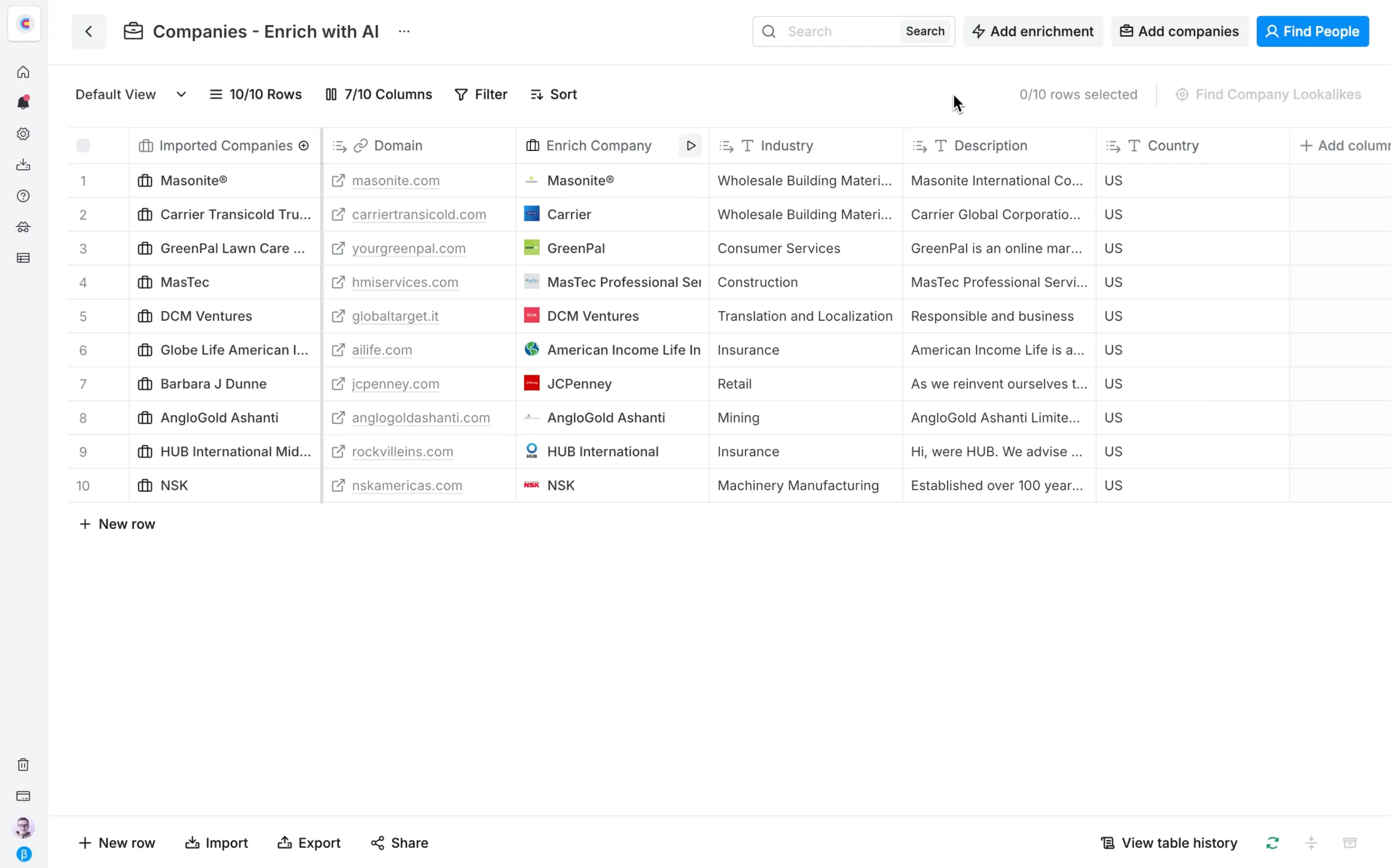
Start with Clay as your central nervous system. Your first move is creating a clean, structured database of your competition. Map out each competitor with their domain, market segment, and primary value proposition. Let the enrichment begin with G2 reviews flowing in, social mentions aggregating, and financial data building up.
Start with the basic framework:
Competitor Name | Competitor Domain |
|---|---|
CompetitorA | domain1.com |
CompetitorB | domain2.com |
Let Clay enrich this with:
- G2 reviews
- Capterra feedback
- Trustpilot ratings
- Company data
Step 2: Train Your AI Analysis System
Your AI system needs clear instructions. Create a systematic framework for analyzing every piece of data that comes in. Focus on benefits mentioned, common frustrations, and feature requests. Look for implementation challenges and success stories. Pay attention to price perception and user segments.
Here's how to turn reviews into intelligence using ChatGPT:
Analyze these competitor reviews and identify:
1. Common pain points across all competitors
2. Feature gaps mentioned repeatedly
3. Pricing complaints and patterns
4. Implementation challenges
5. Customer service issues
6. Integration requirements

Reviews:
[Paste competitor reviews from Clay]

Format the output as:
- Key Findings: [Top 3 insights]
- Pain Points: [Bulleted list]
- Opportunities: [Where you can win]
Step 3: Build Your Battle Cards
Create battle cards that live and breathe. Include company overviews with current data. Map out product analysis with latest features. Document market positions and competitive strategies. Update these automatically as new intelligence comes in.
Think of battle cards as living documents. They should evolve as your competitors evolve. Static battle cards are dead battle cards.
Use this prompt to create actionable battle cards:
Using the competitor analysis, create a battle card including:
1. Their key value props
2. Common customer complaints
3. Feature comparison
4. Pricing strategy
5. Target customer profile
6. Win/loss patterns

Previous analysis:
[Paste AI analysis]
Pain Point Identification
Turn competitor weaknesses into your opportunities:
For each competitor complaint, create:
1. Problem statement
2. Business impact
3. Emotional trigger
4. Our solution
5. Proof points

Reviews:
[Paste specific complaint clusters]
Campaign Creation
Create outbound campaigns that:
1. Address specific competitor pain points
2. Use customer language from reviews
3. Highlight our differentiators
4. Include relevant social proof
5. Drive clear next steps

Pain points:
[Paste analysis]
The Implementation Plan
Set Up Your Tools
- Clay account (use signup link for 3000 credits)
- AI analysis system (Claude or similar)
- CRM integration for targeting
Build Your Database
- List all competitors
- Add their domains
- Run initial enrichment
- Export review data
Create Your Analysis Engine
- List all competitors
- Add their domains
- Run initial enrichment
- Export review data
Clay Table to Run Competitive Inteligence
If you are using Clay, you can copy this table, add the name of your competitors, their domain, and it will run an automation to get reviews from G2 and Capterra, summarize them and build a competitor battle card.